The Wellness Industry is Worth More Than Big Pharma But There’s a Major Difference…
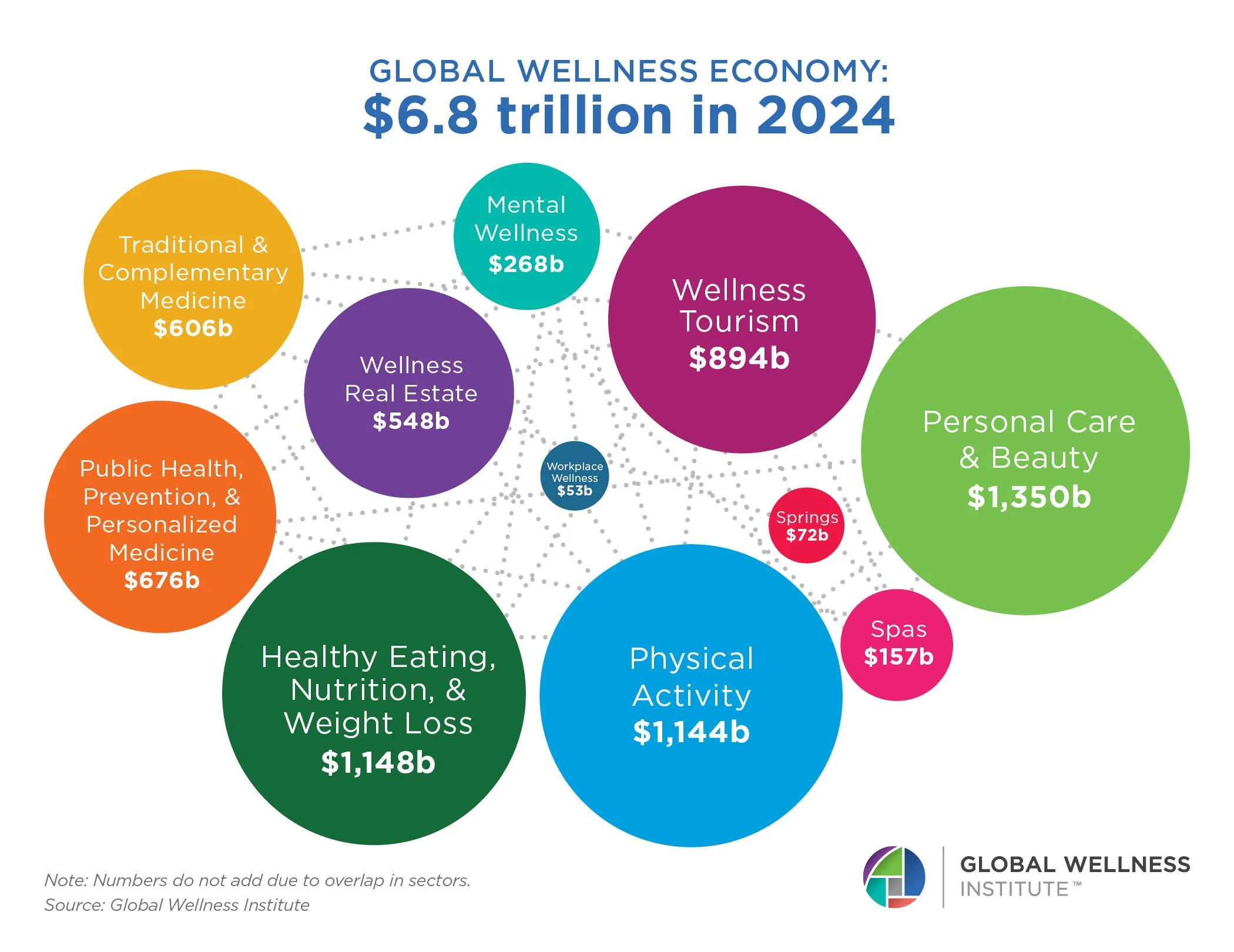
…The Standards of Regulation and Scope of Practice.
Everyone is now aware of the “wellness influencer”, they sell everything from fitness subscriptions to nutritional supplements, but they do not need a degree. The open market has allowed lay people to dictate the newest health and wellness trends with little to no regulation.
It’s true, the wellness industry has grown rapidly over the past decade and while that’s great, it operates with far less regulation which is not so good for the general public.
Pharmaceutical companies must go through years of research, testing, and data collection before a medication reaches the public. There are systems in place to evaluate safety, dosage, and effectiveness.
Much of the wellness industry does not have those same requirements.
Supplement companies can sell products with relatively little oversight, and the people recommending them often do not need degrees in nutrition or training as registered dietitians. Yoga teacher trainings also vary dramatically. One teacher may have extensive anatomy and movement education, while another may have only learned the basics in a short certification. There are no consistent national standards.
From a public health perspective, this raises important questions. If wellness practices are going to be part of preventative health, helping people manage stress, improve movement, and support long-term wellbeing, there needs to be clearer standards around education, training, and scope of practice.
Massage therapy sits in an interesting place within this conversation.
Unlike many parts of the wellness industry, massage therapy is licensed in most states. Practitioners study anatomy, physiology, kinesiology, pathology etc., complete hundreds of hours of training, and pass exams before practicing. But even within massage therapy, the requirements vary widely depending on where you live.
New York requires 1,000 hours of training. New Hampshire requires 750. Massachusetts requires 650. Maine requires 500 and Vermont requires exactly 0 hours. Crossing a state line can mean very different expectations for education and preparation.
This variation is one of the reasons massage therapy often remains categorized within the service or wellness industry rather than being fully integrated into healthcare systems. When standards vary so widely, it becomes harder for medical providers, insurers, and policymakers to view the profession as a consistent part of healthcare.
And yet the work many wellness practitioners do including massage therapists and yoga teachers often supports preventative health. Stress reduction, nervous system regulation, movement, and recovery all play a role in long-term health outcomes.
If wellness is going to be taken seriously as part of preventative healthcare, the field needs stronger standardization. Clearer educational pathways, stronger professional expectations, and shared standards that help build trust with the public.
Regulation doesn’t have to mean restriction. It can mean more credibility.
When something has the power to truly support people’s health, it deserves to be held to a high standard. Supporting people’s health isn’t just about intention, it’s about education, safety, and accountability.
At Sacred Circle Wellness, we prioritize continuing education and strong professional standards so you can feel confident that you are always in good hands.
-Renée